
Creek Bottom Thermals: Hunting Low Ground and Hill Country
By Jake Roberts, retired Green Beret and founder of Wayward Ridge
Creek bottoms hold some of the best deer ground there is. They are also some of the hardest to hunt without getting winded. Water, cover and deer travel all come together in the low ground. So does the air.
Moving water stays cooler than the ground around it, day and night. That makes creek and river bottoms a natural drain. Cool air slides down to them, settles and follows the water downstream. Scent moves with it.
How thermals move in a creek bottom
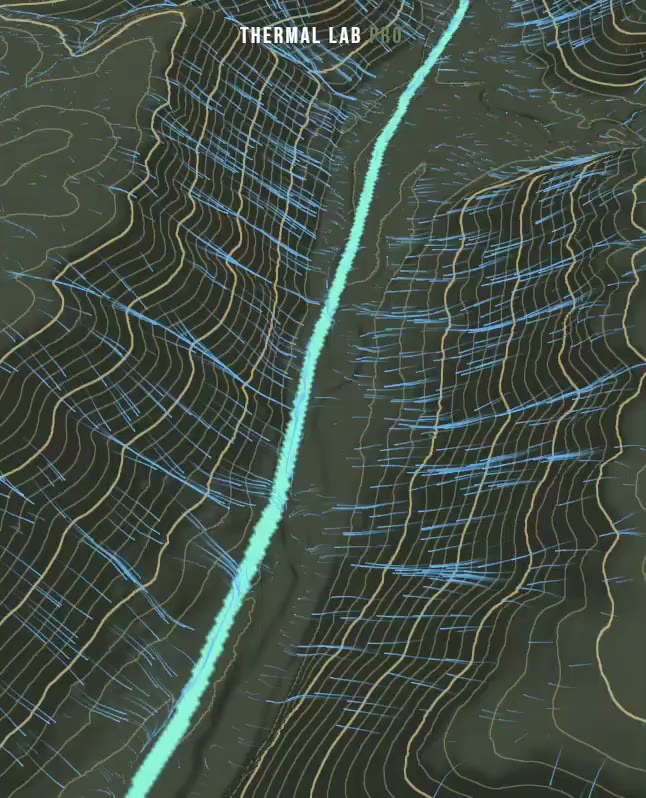
Before daylight and after dark. Air drains off every slope into the bottom. Then it moves down the drainage along the creek. Scent left in the bottom tends to hang there and drift downstream.
Mid-morning to afternoon. Sunny slopes above the bottom start to push air up. The bottom often stays cooler and changes slower. This is most true under thick timber or along bigger water. Rising air on the hillsides and slow, drifting air in the bottom can happen at the same time.
Evening. As the slopes go into shade, air sinks back into the bottom. Sinking air off the ridges carries deer scent down to the hunter. The hunter's scent also pools in the bottom, often where deer come in late. This is why evening sits in low ground go wrong so often.
Thermals in hill country
Rolling hill country is a stack of small slopes, fingers and draws that all drain into creeks. Every finger has a sunny side and a shady side. Every draw is a small drain. Where several draws meet, thermal hubs form, and air pools and swirls there.
That is why the same wind plays out so differently from one draw to the next. The forecast is the same for the whole farm. The air on each slope is not.
Setting up in low ground
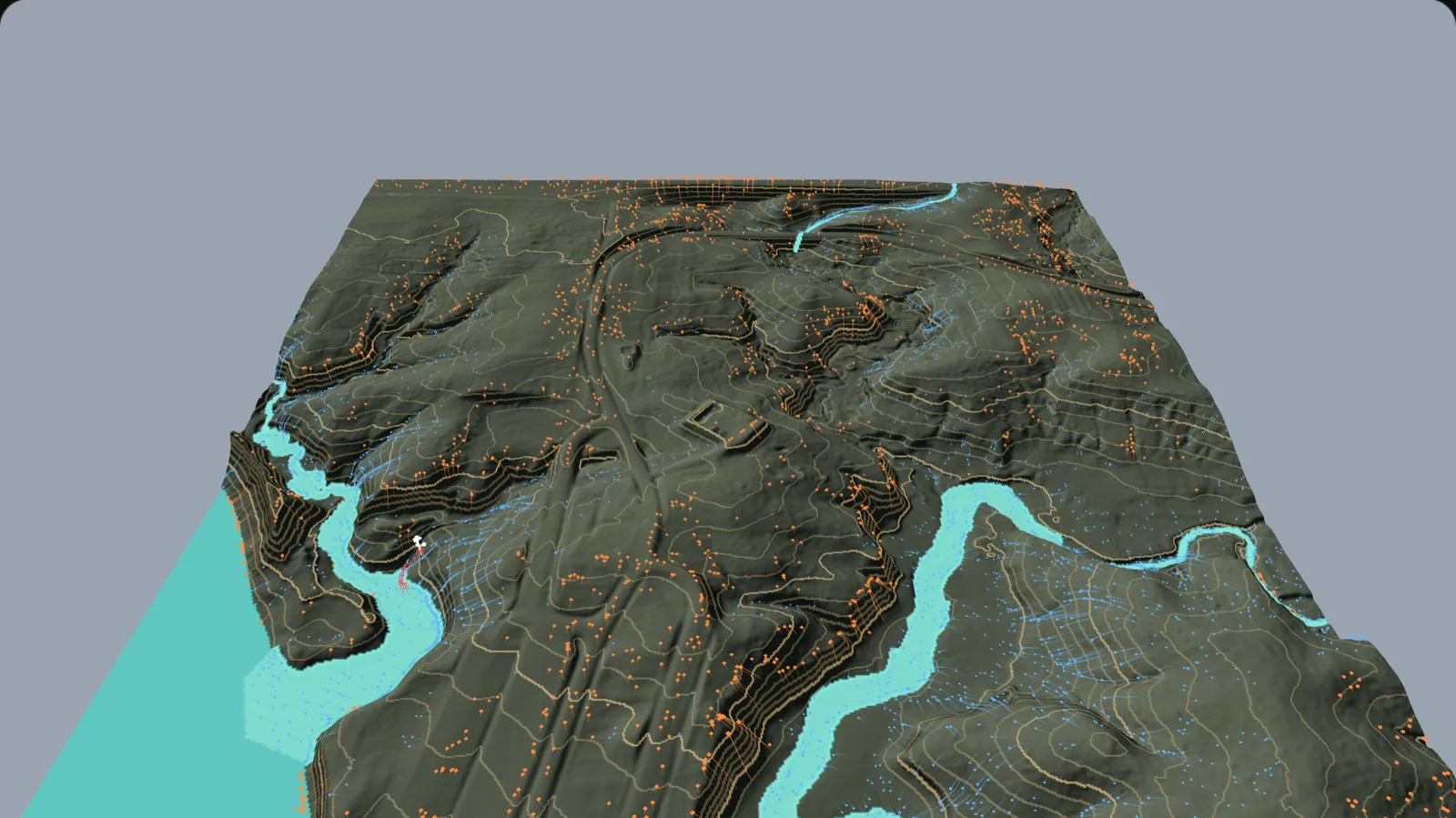
Evening sits low. Find where scent will collect and which way it will drift once air starts sinking. If deer will cross it before dark, move.
Morning sits. Before the switch, air in the bottom moves downstream. A setup where that air carries scent away from where deer are headed can work until the slopes warm up.
Access along the water. Walking in along the creek leaves scent where air collects. Come in from the side or from above instead. Sinking air then carries scent into the bottom behind you, away from bedding.
Elk. The same pattern shows up along mountain creeks and in river bottoms, only stronger. Cold air pours down drainages at night and in the evening.
Seeing where scent pools
Thermal Lab Pro includes moving water in its view of real terrain. It estimates air draining toward the creek and where it pools, minute by minute.


FAQ
Do creeks affect thermals?
Yes. Moving water stays cooler than the ground around it. Creek and river bottoms pull cool air down toward them and along the drainage.
Is it bad to hunt a creek bottom in the evening?
Not always, but it is risky. Air sinking into the bottom pools scent where deer often come in late. Find where it collects first.
How do thermals work in hill country?
Each finger and draw has its own sunny and shady side. The air can move differently on every slope under the same wind.
Which way does air move in a creek bottom at night?
It sinks off the slopes into the bottom. Then it moves downstream along the water.
Estimates only. Always confirm conditions in the field.