
Sun, Shade and Thermals: Why Sunrise Doesn't Flip the Air
By Jake Roberts, retired Green Beret and founder of Wayward Ridge
Thermals do not switch at sunrise. They switch when sunlight reaches a slope and warms the ground. The warm ground then heats the air just above it. That warm air rises and moves uphill.
Sunrise is the time the sun clears the horizon. A slope may not get direct sun for an hour or more after that. Until it does, the air on that slope keeps sinking.
What warms a slope
The sun has to hit the ground first. On most mornings the ground is wet with dew. The sun dries off the dew before the ground can warm up. Then the ground heats up. The warm ground heats the air touching it, and that warm air rises.
Three things decide how soon that happens on a slope.
Which way the slope faces. East faces get sun first, so they warm first. West faces warm later in the morning. North faces get little direct sun late in the season. They can hold cool, sinking air for most of the day.
What blocks the sun. A ridge or tall hill to the east keeps a slope in shade after sunrise. A deep draw can stay shaded long after the ridgetops above it are in full sun.
What covers the ground. Open ground and fresh cuts heat fast. Thick timber heats slowly. Clouds slow down all of it.
How shade changes thermals
Shade works the other way. When the sun leaves a slope, the ground cools. The air on it cools too, and it starts to sink downhill. The slope that goes into shade first is the first to switch.
Two slopes a few hundred yards apart can do opposite things at the same time. A shaded west face can still have sinking air in the morning. The sunny east face across the draw can already have rising air.
Sun, shade and whitetail
On a morning hunt, scent drains downhill until the sun reaches the stand. Once the sun hits, scent starts to rise. If deer bed above the stand, that switch is when they are most likely to wind the hunter.
In the evening it runs the other way. A ridge to the west puts the slope in shade early. The air starts falling again. A hunter sitting low will have scent pool in the bottom, often where deer come in late.
Sun, shade and elk
Mountains make the shade effect bigger. South faces switch early and strong. North-facing timber stays cool and keeps air sinking well into the morning. One side of a drainage can have rising air while the other side has falling air. For a stalk, the side that is in sun at the time of the approach matters more than the sunrise time.
Seeing sun and shade on your ground
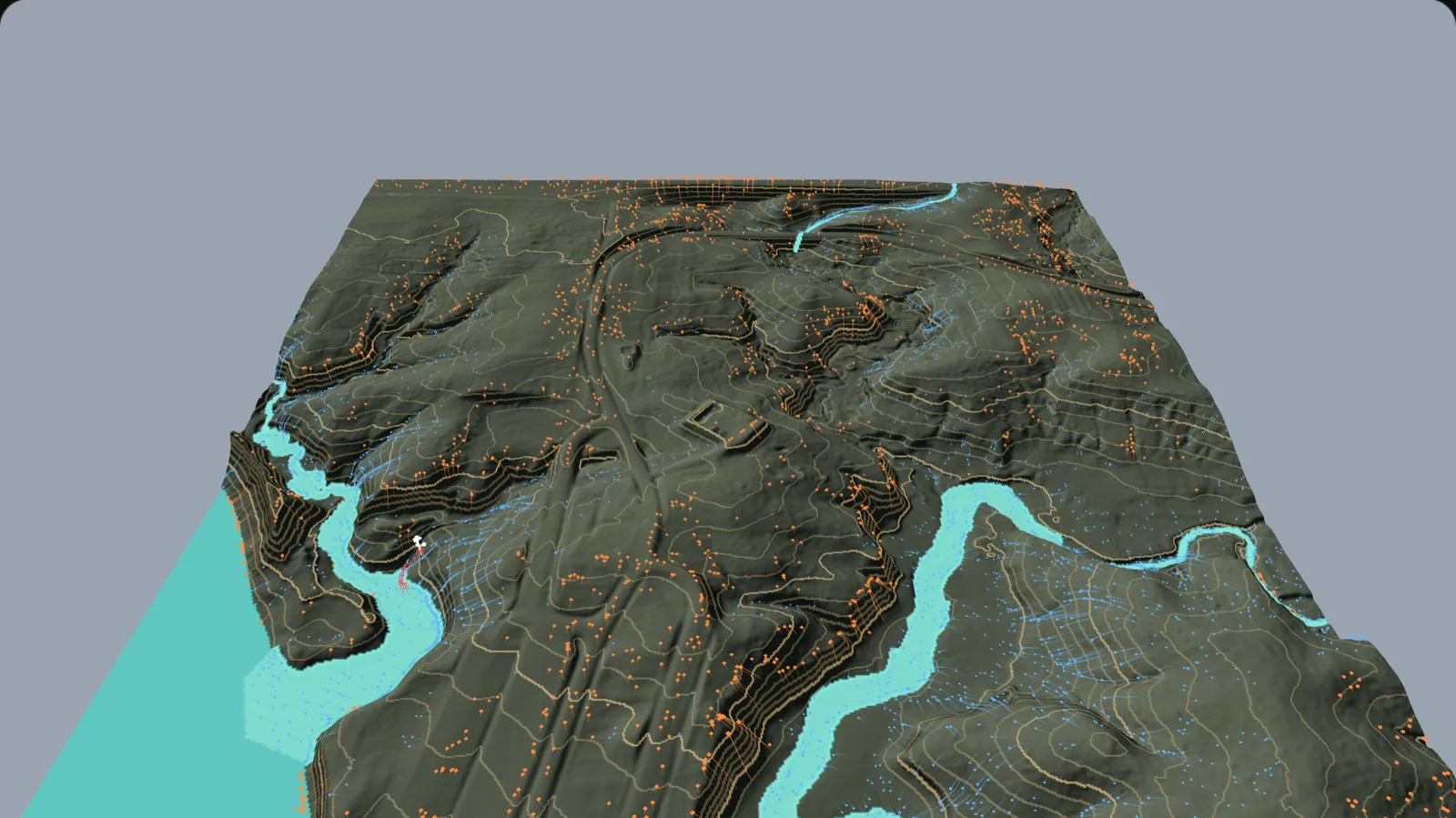
Thermal Lab Pro estimates sun and shade on real terrain, minute by minute. It shows when a spot is likely to switch and where scent is likely to go.


FAQ
Do thermals change at sunrise?
Not usually. They change when direct sun warms the slope. On shaded ground that can be an hour or more after sunrise.
Which slopes warm first in the morning?
East faces get first light and warm first. West and north faces warm later. Shaded draws can stay cool for hours.
Does shade affect thermals in the evening?
Yes. When a slope goes into shade, the ground cools and the air sinks. Slopes with a ridge to the west switch first.
Do clouds change thermals?
Yes. Clouds slow warming, so rising air starts later and stays weaker. A cloudy morning can hold sinking air much longer.
Estimates only. Always confirm conditions in the field.