
Thermals vs Wind: Which One Moves Your Scent?
By Jake Roberts, retired Green Beret and founder of Wayward Ridge
A wind forecast covers a whole area. Thermals are what the air does on one slope. Scent follows whichever one is stronger at that moment.
A forecast can say northwest at 6 mph while a deer still winds the hunter from the "wrong" side. The forecast was not wrong. It just did not cover what the air was doing on that slope.
What a wind forecast shows
A wind forecast is a broad reading for open ground, well above the trees. It shows the general direction of the wind and how hard it blows. It is a good place to start a plan.
It does not show what happens when wind hits a ridge, drops into a draw or slows down under timber. It also does not show air moving up or down a slope as the ground warms and cools.
What thermals add
Thermals are air moving uphill or downhill as the ground heats and cools. They sink early and late. They rise once the sun warms the slope. Thermals are local. Two slopes a few hundred yards apart can have thermals moving opposite ways at the same hour.
Thermals vs wind: which one wins
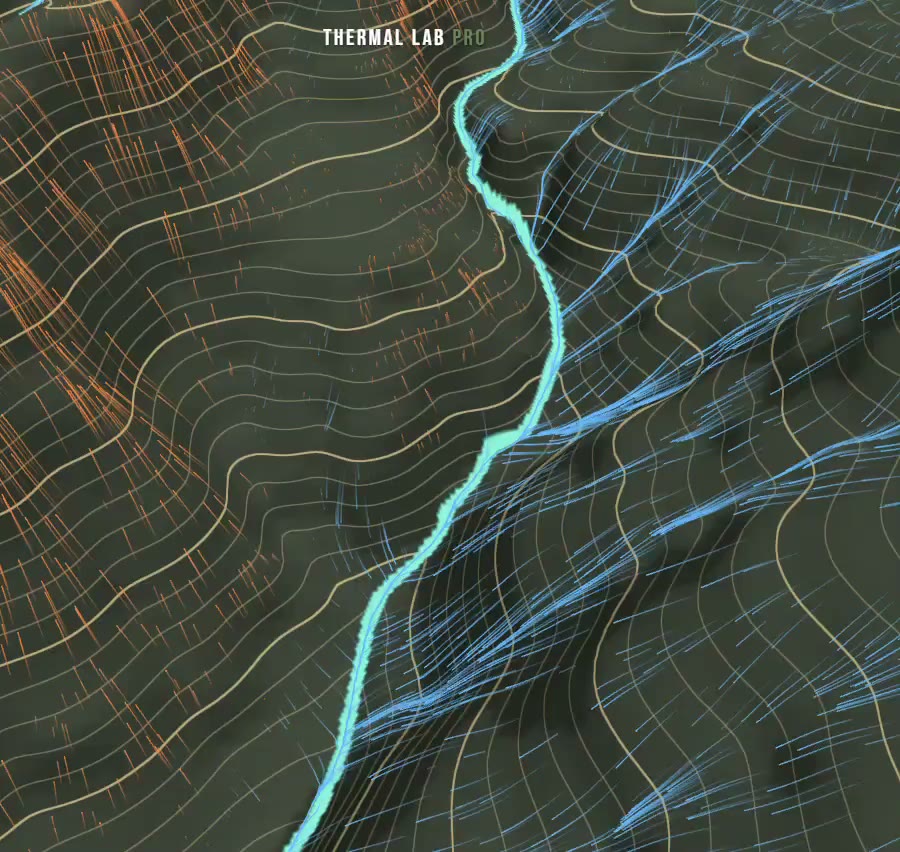
It depends on how hard the wind blows.
Calm to light wind. Thermals usually control where scent goes. The forecast can say northwest at 4 mph while the air in a draw slides straight downhill.
Moderate wind. The two mix. Wind pushes the thermals around, and scent drifts somewhere between the two directions. Most surprises happen here.
Strong wind. Wind controls exposed ground and ridgetops. Thermals still show up in sheltered draws, on the downwind side of ridges and in thick timber.
How terrain bends the wind
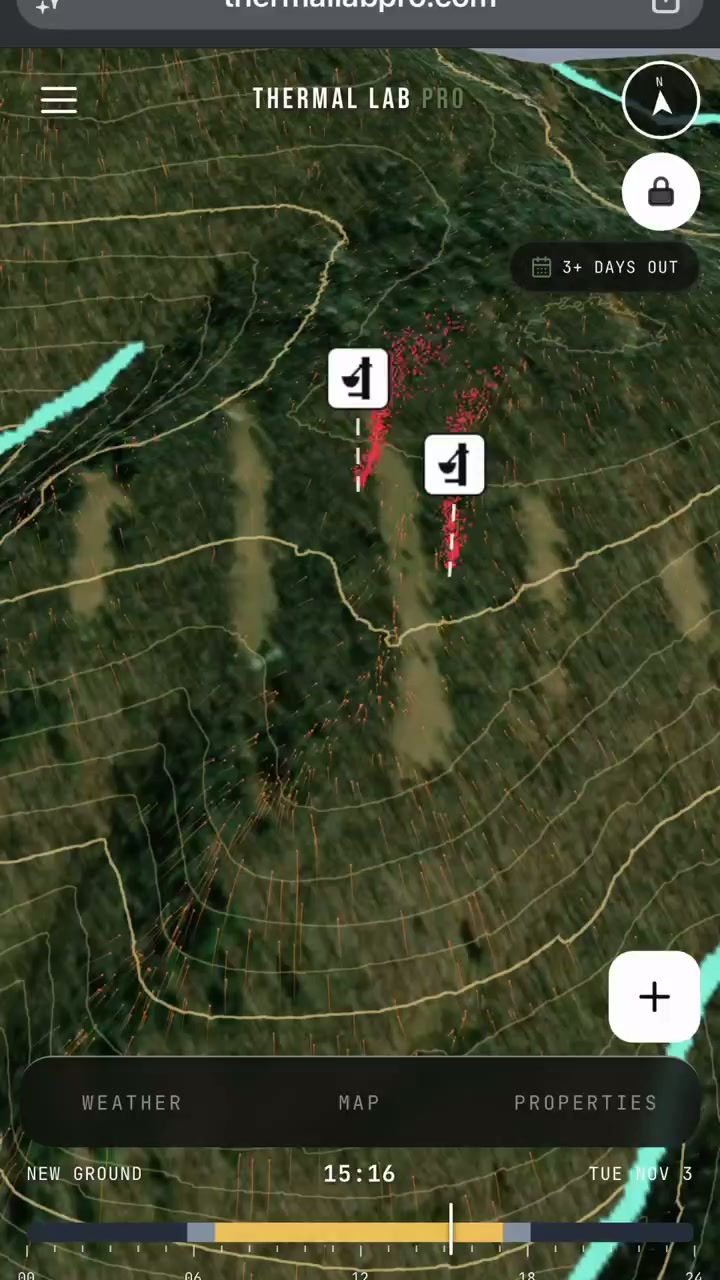
Wind does not flow over terrain in a straight line. It curls over ridges and swirls on the downwind side. It funnels through saddles and gaps. In a deep draw it can blow close to the opposite of the forecast. This all adds to what the thermals are doing.
Putting thermals and wind together
- Start with the forecast: direction, speed and gusts.
- Work out what thermals do on that slope at the hour of the hunt.
- Think about how the terrain bends both.
- Check the air on site with a wind checker or milkweed.
Elk hunting follows the same steps. Mountain thermals are strong enough that on calm days they control almost everything.
Seeing wind and thermals together
Thermal Lab Pro combines forecast wind and gusts with thermals on real terrain, minute by minute. It estimates where scent goes when the two work together.


FAQ
Are thermals stronger than wind?
On calm and light-wind days, thermals usually control scent. Strong wind bends them on open ground but rarely wipes them out in draws and timber.
Why is my scent going the opposite way of the wind forecast?
Thermals or terrain are likely winning. Sinking air in a draw or a swirl behind a ridge can move scent against the forecast.
How much wind cancels thermals?
There is no set number. Steep slopes and strong sun take more wind to cancel. Sheltered ground keeps thermals the longest.
Do I need a wind checker if I know the thermals?
Yes. A plan shows what to expect. A wind checker shows what the air is doing right now.
Estimates only. Always confirm conditions in the field.