
When Do Thermals Switch? Morning vs Evening Setups
By Jake Roberts, retired Green Beret and founder of Wayward Ridge
Thermals switch twice a day. In the morning, sinking air turns into rising air. In the evening, rising air turns back into sinking air. The air swirls while it changes, so the switch is the riskiest part of a hunt.
Thermals switch when the sun reaches a slope in the morning and when it leaves the slope in the evening. That is usually not sunrise or sunset.
The morning thermal switch
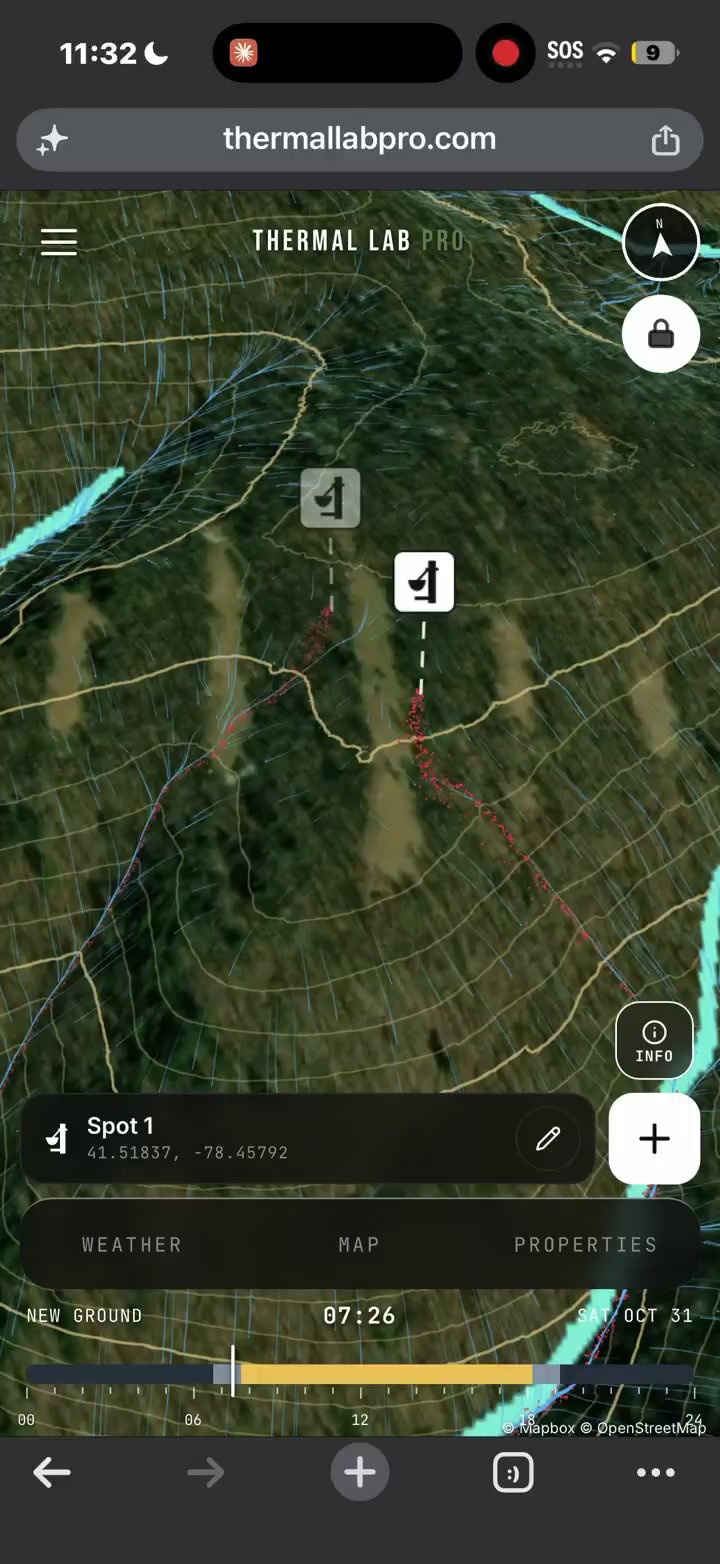
All night the ground loses heat. Cool air drains downhill and settles in the bottoms. This keeps going after sunrise. First the sun has to hit the ground and dry off the dew. Then the ground heats up and warms the air touching it. That is when the air on the slope starts to rise.
What changes the timing:
- Slope direction. East faces switch first. West and north faces switch later.
- Terrain to the east. A ridge or tall hill keeps a slope in shade and holds the switch back.
- Cover. Open ground switches fast. Thick timber is slower.
- Clouds. A cloudy morning can hold sinking air for hours.
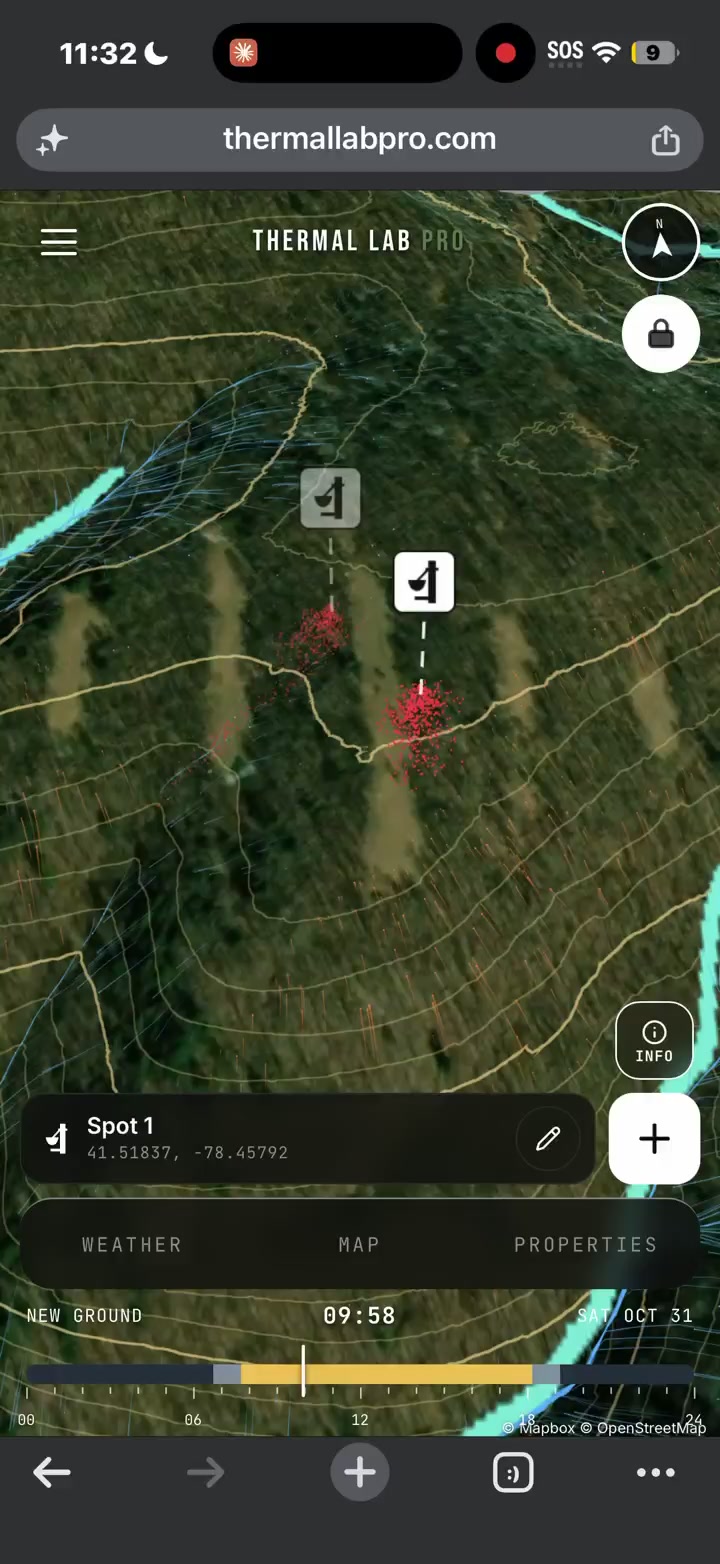
On a lot of ground, the morning switch comes one to a few hours after sunrise. On a shaded north face late in the season, it may barely happen.
The evening thermal switch
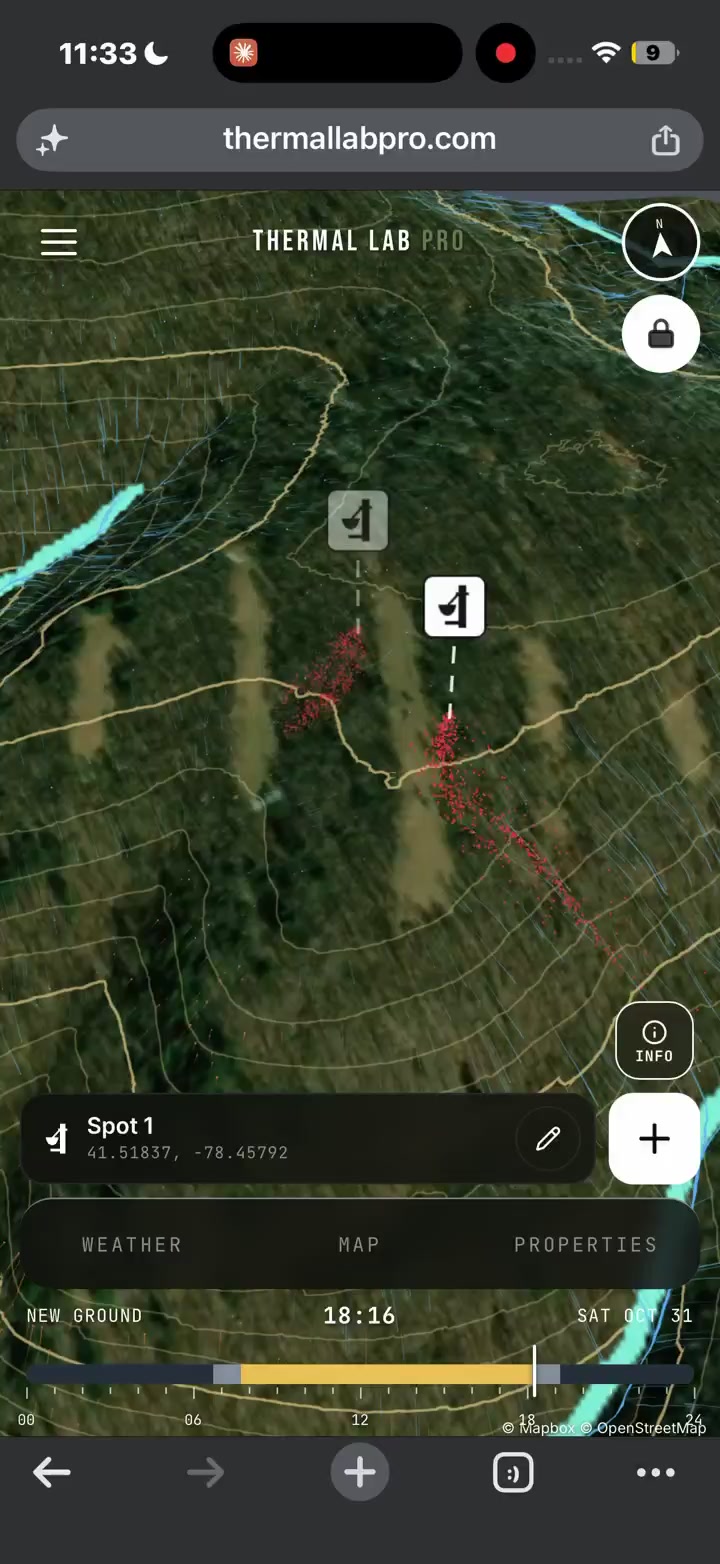
When a slope goes into shade, the ground cools. The air on it cools and starts to sink. Slopes with a ridge to the west go into shade first, so they switch first. By dark, most ground drains back toward the bottoms and the water.
The evening switch often comes early. On the east side of a ridge, a slope can go into shade an hour or more before sunset.
Morning setups vs evening setups
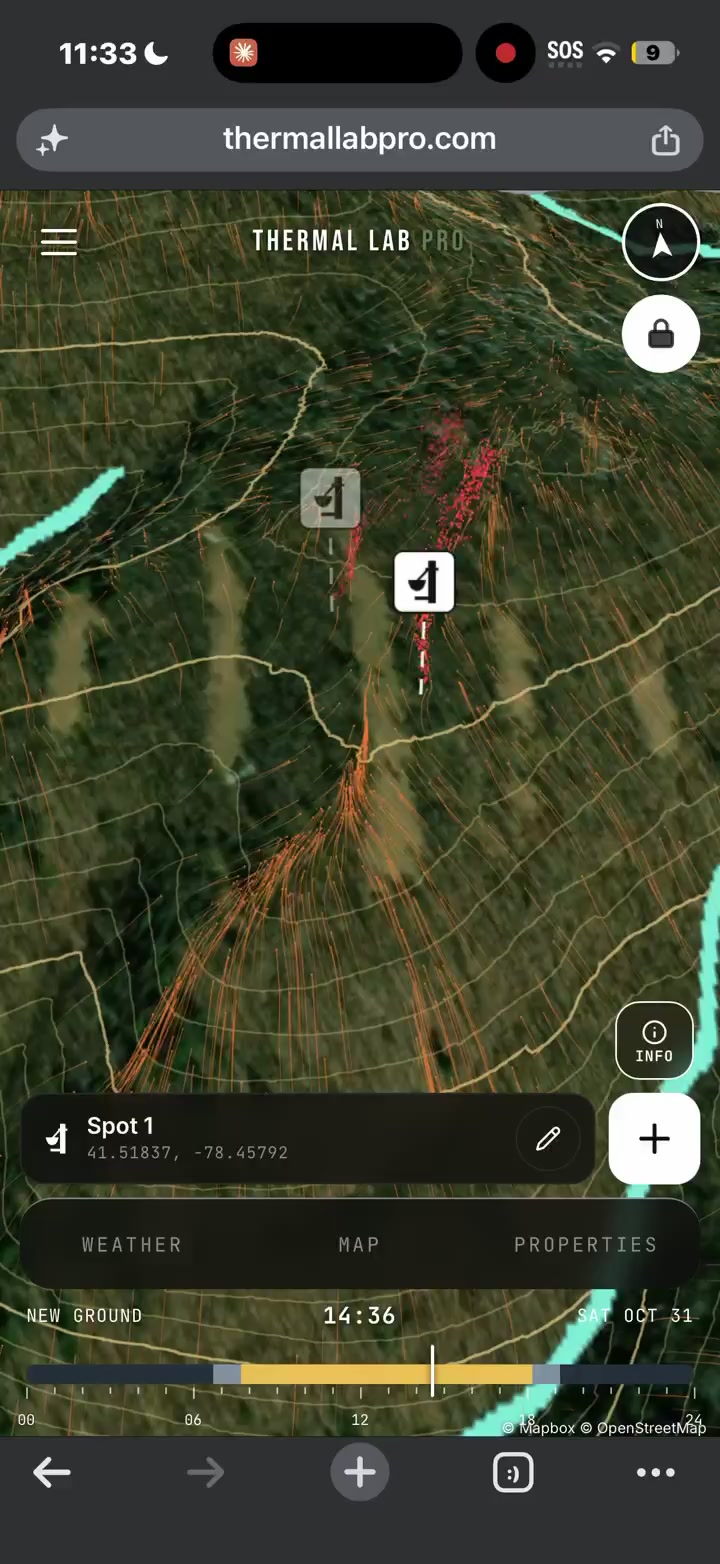
Mornings and evenings usually need different setups on the same property.
Morning setups. Scent drains downhill until the switch. A good morning setup lets that sinking air carry scent away from where deer are moving. It also helps to know about when the spot will switch. If deer bed above the stand, the switch is when they are most likely to wind the hunter.
Evening setups. After the switch, air sinks off the ridges and carries deer scent down to the hunter. The hunter's scent also pools in the low ground. Before an evening sit low, find where scent will collect and whether deer will cross it before dark.
Elk. Stay below elk when air sinks and above them when it rises. Avoid closing the distance in the middle of the switch.
Avoid sensitive spots during the switch
While the air changes, it can move in any direction for a while. This is a bad time to sit somewhere risky or walk past bedding. Move before or after the switch.
Seeing when your spot switches
Thermal Lab Pro estimates when sun reaches and leaves a spot on real terrain, down to the minute. It shows where scent is likely to go before, during and after the switch.


FAQ
What time do thermals switch in the morning?
When direct sun warms the slope. That is often one to a few hours after sunrise, and later on shaded or north-facing ground.
What time do thermals switch in the evening?
When the slope goes into shade. With a ridge to the west, that can be an hour or more before sunset.
Why do thermals swirl?
During the switch, rising air and sinking air push against each other. Until one wins, the air can move any direction.
Should I hunt the same spot morning and evening?
Often not. The air moves opposite ways, so mornings and evenings usually need different setups.
Estimates only. Always confirm conditions in the field.