
Thermal Hubs: What They Are and How to Hunt Around Them
By Jake Roberts, retired Green Beret and founder of Wayward Ridge
A thermal hub is a low spot where several draws, slopes or drainages meet. Air drains into it from more than one direction. The air piles up and swirls. Scent that gets into a hub does not go one way. It spreads in every direction.
Mature deer often use the ground around hubs. Hunters often get caught in them.
How to find a thermal hub
Follow the low ground on a topo or LiDAR map. Any spot where two or more draws run together can be a hub. Strong hubs often have:
- Several fingers or draws dropping into one bowl or bottom
- A creek junction, where a small drainage meets a bigger one
- A flat or bench where sinking air slows down and collects
- Thick cover nearby, where deer can bed and smell the whole area
Hill country has hubs everywhere. In the mountains they show up as basins where several draws empty into one bottom.
Why deer use thermal hubs
A deer near a hub can smell air coming from several directions at once. In the evening, air sinks off every slope around it. Scent from all of that ground drains down to the deer.
Why hunters get caught in thermal hubs
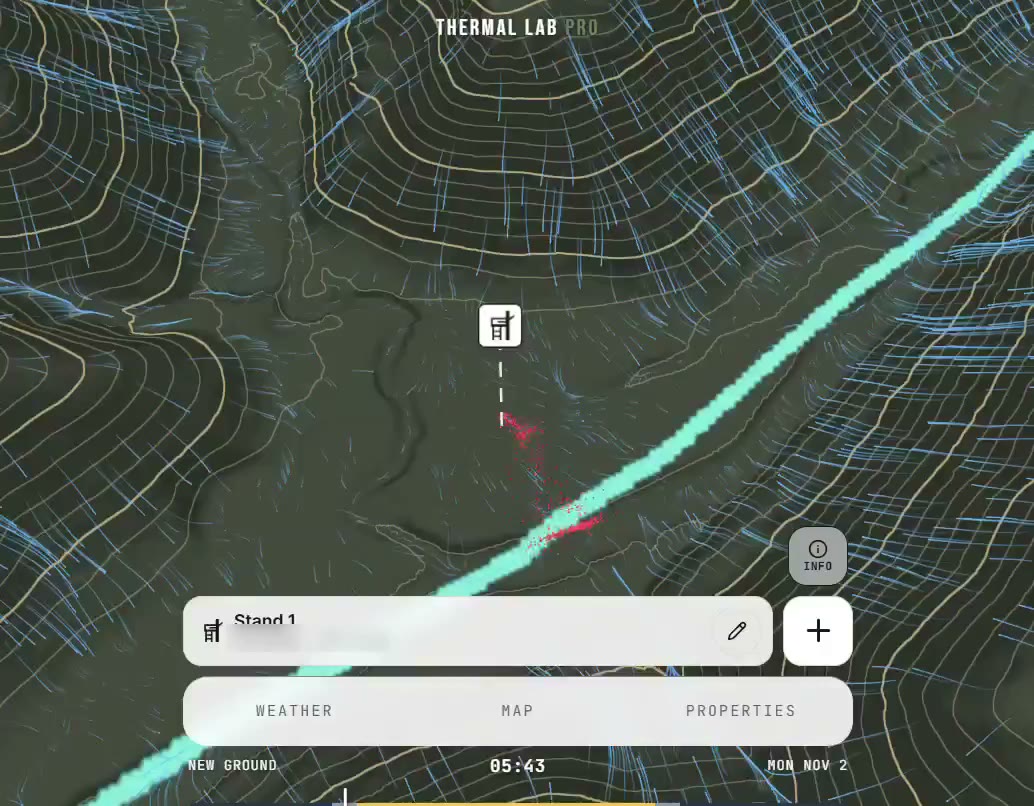
Scent left in a hub spreads into every draw that feeds it. Playing the wind does not work in a spot where the air swirls. The forecast wind can be steady while the air in the hub is not.
The switch makes it worse. When thermals change in the morning and evening, a hub is one of the hardest places on a property to predict.
How to hunt around thermal hubs
Sit on the edge, not the middle. A point or side slope above the hub gives a view into it. Scent there moves one way instead of every way.
Know which way the air moves at that hour. In the morning, sinking air carries scent toward the hub. Once sun warms the slopes, air lifts out of the hub and up the faces.
Plan the walk in around it. Pick a route that stays out of the hub. Keep scent from draining into it before the hunt starts.
For elk, basins that act like hubs collect cool air in the morning and evening. Bulls bedded on the timbered edges can smell most of the basin. Working the edges is safer than dropping into the bowl.
Seeing thermal hubs on your ground
Thermal Lab Pro estimates where air drains into low spots on real terrain, and where it pools and swirls, minute by minute.


FAQ
What is a thermal hub in deer hunting?
A low spot where several draws or slopes meet. Air drains in from several directions and swirls, so scent spreads every way.
Should I hunt in a thermal hub?
Usually not in the middle of it. The edge or the ground above it keeps scent moving in one direction.
Why do mature bucks bed near thermal hubs?
They can smell air from several directions at once, mostly in the evening when air sinks into the hub from every slope.
Do elk use thermal hubs?
Yes. Mountain basins where draws meet collect cool air. Elk bedded on the timbered edges can smell most of the basin.
Estimates only. Always confirm conditions in the field.